Search for “taiwan rental car gharry” and you’ll quickly notice something odd. Some pages treat it like a general travel term. Others point to a specific company. The confusion matters, because if you’re planning a trip to Taiwan and thinking about renting a car, the difference isn’t just semantic—it shapes your entire experience on the road.
Here’s the reality: in most cases, “Gharry” refers to a real car rental provider in Taiwan, not a generic category. And that means the smarter question isn’t just what the term means, but whether renting from Gharry—or renting a car at all—is the right move for your trip.
This article takes a closer look at that question, grounded in how travel in Taiwan actually works, what foreign drivers need to know, and where the risks and trade-offs show up.
What “Taiwan Rental Car Gharry” Actually Refers To
Despite the way it appears in search results, “gharry” isn’t a widely used term in Taiwan for car rentals. Historically, the word comes from South Asia, where it described a horse-drawn carriage. That meaning hasn’t carried over into Taiwanese travel vocabulary.
In Taiwan today, “Gharry” most often points to a specific rental service brand that offers both self-drive vehicles and chauffeur-based transport. Their English-language website positions the company as a hybrid between a traditional car rental agency and a private transport provider, with options for airport pickup, intercity transfers, and full-day charters.
That distinction is important. If you’re typing the phrase into Google, you’re likely already in the decision phase—trying to figure out whether this particular provider is worth booking, and what the process looks like for a visitor.
How Gharry Car Rental Works in Taiwan
At a basic level, Gharry operates like a standard rental company, but with a few additional service layers aimed at travelers. You can rent a car and drive it yourself, or you can book a driver along with the vehicle. That second option is more common in East Asia than in many Western countries, and it can change how you think about cost and convenience.
Booking is typically done online, with confirmation details sent in advance. At pickup, you’ll be asked for a passport or ID, a valid driver’s license, and a credit card for deposit purposes. The company’s published requirements also mention that the card should remain valid for an extended period, which is a detail that sometimes catches travelers off guard.
The fleet appears to cover a range of vehicles, from compact cars suited for city driving to larger vans for groups. That sounds standard, but here’s where it gets interesting: the appeal isn’t just the car itself. It’s the flexibility to combine rental and transport services in a country where not every region is equally accessible by train.
Can Foreigners Rent a Car in Taiwan?
The short answer is yes, but the conditions are more specific than many travelers expect.
Taiwan allows foreign visitors to drive with an international driving permit (IDP) in many cases, but the rules depend on how long you stay and where your license is issued. For short visits—generally under 30 days—an IDP issued by your home country is often enough. For longer stays, you may need to register that permit locally or obtain a Taiwanese license.
But here’s the catch: not every country’s license is treated the same way, and rental companies sometimes apply their own internal policies on top of government rules. Some services mention additional checks for drivers from certain countries or regions, which means it’s worth confirming your eligibility directly before booking.
If you assume that a standard driver’s license will automatically work, you could run into problems at the counter. That’s one of the most common friction points for first-time visitors.
Age Limits, Deposits, and Practical Requirements
Most rental companies in Taiwan, including Gharry, set age limits that fall roughly between 20 and 65 years old. That’s fairly typical, but it still excludes younger travelers who might otherwise expect to rent freely, especially if they’ve driven abroad before.
Deposits are usually handled through a credit card hold, and the exact amount can vary based on the vehicle class and rental duration. While this is standard globally, Taiwan’s rental market tends to be stricter about documentation. Missing paperwork can delay or cancel a booking on the spot.
Insurance is another area that deserves attention. Some rental agreements include basic coverage, but additional protection may cost extra. If you’re relying on credit card insurance, you’ll want to check whether it applies internationally and whether Taiwan is covered.
These details don’t make renting difficult, but they do mean that casual assumptions can backfire.
How Much It Costs to Rent a Car in Taiwan
Prices vary widely depending on the vehicle, location, and season. A small car might cost the equivalent of around NT$1,000 to NT$2,000 per day, while larger vehicles or premium models can push that higher. Holiday periods and peak travel seasons tend to raise rates across the board.
But the base price is only part of the story. Add-ons like GPS units, child seats, additional drivers, and insurance upgrades can increase the final cost. Fuel and tolls also factor in, especially if you’re planning longer drives.
Here’s where it becomes less straightforward. Taiwan’s public transportation system is strong, particularly along the west coast. High-speed rail connects major cities quickly, often making car rental unnecessary for straightforward itineraries. So the real cost comparison isn’t just about rental rates—it’s about whether you need a car at all.
Where Renting a Car in Taiwan Makes Sense
If your trip is centered on Taipei, Taichung, or Kaohsiung, a rental car may feel like more trouble than it’s worth. Parking can be limited, traffic can be dense, and trains cover most major routes efficiently.
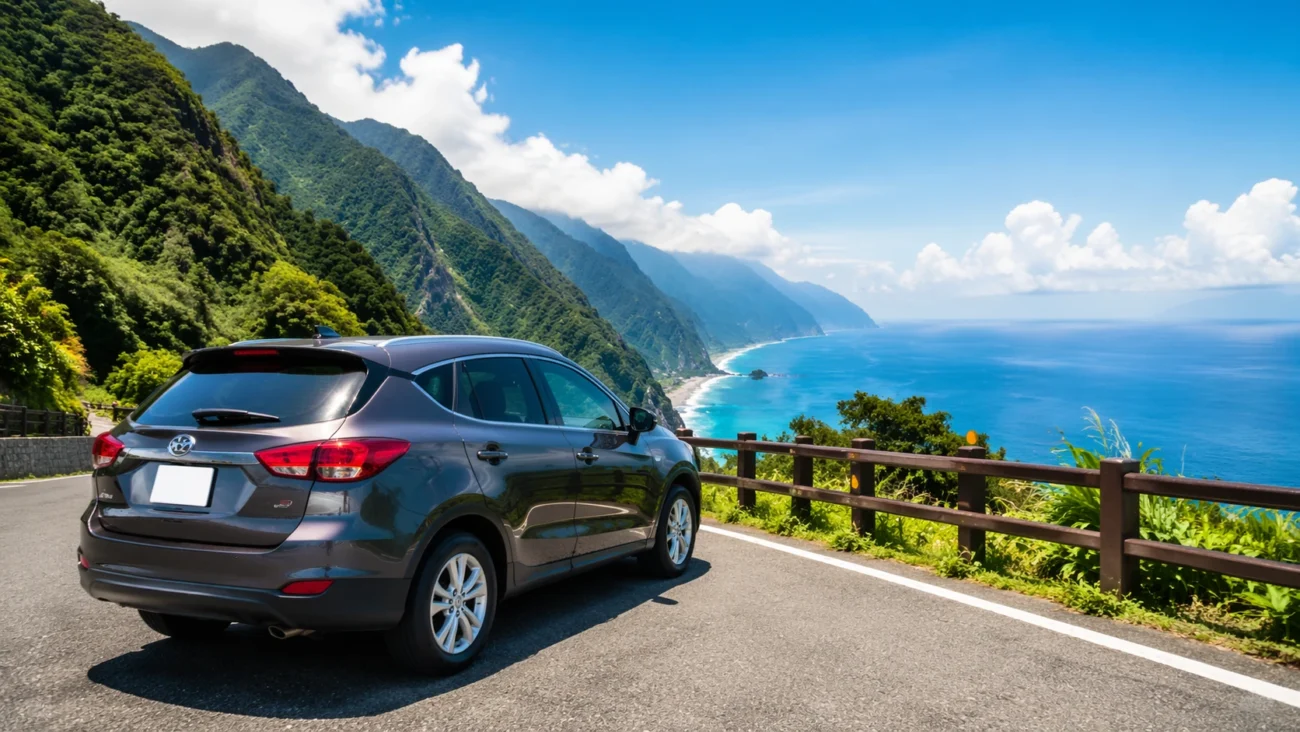
That said, Taiwan changes once you move beyond those corridors. The east coast, including Hualien and Taitung, offers dramatic scenery but fewer transport options. Mountain areas like Alishan or the central highlands also benefit from the flexibility of having your own vehicle.
Traveling with family or a group can tip the balance further. Splitting the cost of a rental may end up comparable to train tickets, while giving you more control over your schedule. And if you’re carrying luggage or planning multiple stops in one day, the convenience becomes more tangible.
This is where services like Gharry position themselves as useful—not just as rental providers, but as flexible transport solutions.
What Driving in Taiwan Is Actually Like
Driving in Taiwan isn’t especially difficult, but it does require adjustment. Roads are generally well maintained, signage is often bilingual, and navigation apps work reliably. That’s the easy part.
The harder part is adapting to local driving habits. Scooters are everywhere, particularly in urban areas, and they move differently from cars. Lane discipline can feel looser than in some Western countries, and traffic flow may seem unpredictable at first.
Speed cameras are common, and fines are enforced. Toll roads operate electronically, which means charges are often billed through the rental company rather than paid manually.
None of this makes driving unsafe, but it does mean you need to stay alert, especially during your first few hours behind the wheel.
How Gharry Compares to Other Rental Options
Taiwan’s rental market includes international brands like Avis and Budget, local companies, and booking platforms that aggregate multiple providers. Each option comes with trade-offs.
International brands tend to offer more standardized processes and clearer English-language support. Local companies may offer better pricing or more flexible terms. Online platforms can simplify comparison but sometimes add layers between you and the actual provider.
Gharry sits somewhere in between. Its focus on traveler-oriented services, including chauffeur options, makes it appealing for those who want flexibility without navigating multiple providers. But that doesn’t automatically make it the best choice for every trip.
The right option depends on what you value more: price, convenience, language support, or service range.
Common Problems Travelers Run Into
Renting a car in Taiwan usually goes smoothly, but a few issues come up repeatedly.
License mismatches are a frequent source of confusion, especially for travelers who assume their home license will be accepted without an IDP. Deposit policies can also surprise people, particularly if they’re not used to larger holds on their credit card.
Parking is another pain point. In cities, finding a legal space can take time, and costs add up quickly. Rural areas are easier, but they come with their own challenges, such as narrow roads or limited signage.
And then there’s overconfidence. Taiwan’s infrastructure is good, but that doesn’t mean every route is simple. Mountain roads, in particular, require careful driving and realistic time estimates.
Frequently Asked Questions
Frequently Asked Questions About Taiwan Rental Car Gharry
What does “taiwan rental car gharry” mean?
Most of the time, the phrase refers to Gharry Car Rental, a specific company operating in Taiwan. It’s not a general term for car rentals in the country, even though it may appear that way in search results.
Can tourists rent a car from Gharry in Taiwan?
Yes, tourists can rent from Gharry if they meet the company’s requirements. That usually includes a valid passport, driver’s license, and an international driving permit where applicable, along with a credit card for the deposit.
Do I need an international driving permit in Taiwan?
In many cases, yes. Short-term visitors can often drive with an IDP issued in their home country, but longer stays may require additional steps such as registration or a local license. It’s best to confirm your specific situation before arrival.
Is renting a car in Taiwan better than using public transport?
It depends on your itinerary. Public transport works well in major cities and along the west coast. Renting a car becomes more useful for rural areas, the east coast, or trips that involve multiple stops in one day.
Does Gharry offer chauffeur services?
Yes, Gharry promotes both self-drive rentals and chauffeur-based services. This can be useful for travelers who prefer not to drive or who want a more guided experience.
How much does it cost to rent a car in Taiwan?
Prices vary by vehicle and season, but small cars often start around NT$1,000 per day and can go significantly higher for larger or premium vehicles. Additional fees for insurance, equipment, and fuel can increase the total cost.
Conclusion
The phrase “taiwan rental car gharry” looks simple, but it carries more weight than it seems. It points to a specific service, but also to a broader decision about how to move through Taiwan. That decision isn’t always obvious, especially in a country where public transport is strong but not universal.
Gharry itself sits in a middle ground. It offers the basics of car rental, along with extras that reflect how travel works in Taiwan. For some visitors, that combination will make things easier. For others, it may add cost without enough benefit to justify it.
So what does this actually mean for your trip? If you’re heading into rural or less-connected areas, a rental car can open up routes that trains and buses don’t cover well. If your plans are centered on major cities, you may find that you don’t need one at all.
The smartest approach is to treat car rental as a tool, not a default. Look at your itinerary, check the rules that apply to your license, and weigh the trade-offs honestly. Once you do that, whether you choose Gharry or another option becomes a clearer—and more practical—decision.
