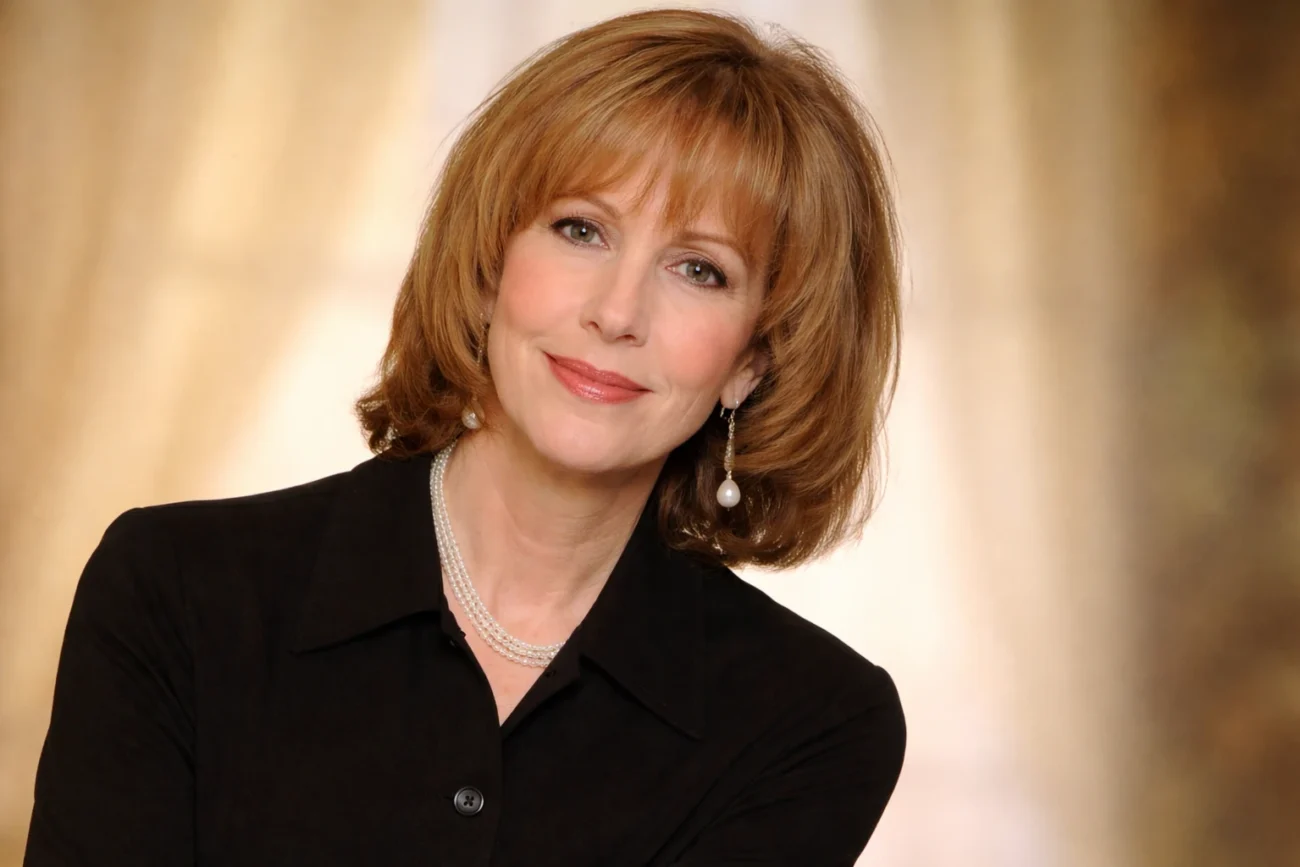
For many people, the name Jayne Posner appears suddenly and without context, often linked to one of America’s most recognizable singer-songwriters, Neil Diamond. But beyond that association, the public record grows thin, and the story becomes less about celebrity and more about absence—about a life that stayed largely outside the spotlight even as it briefly intersected with it.
The truth is, Jayne Posner is not a public figure in the conventional sense. She did not build a career in entertainment, nor did she cultivate fame after her marriage ended. What remains instead is a careful outline: a young woman who married early, shared a formative chapter with a rising artist, and then stepped away from public view. That restraint—intentional or otherwise—has shaped how she is remembered.
Her story, such as it can be told, is grounded in verifiable moments rather than myth. And in an age where even minor figures are often overexplained, that makes her biography both unusual and quietly compelling.
Early Life and Family
Details about Jayne Posner’s early life are limited, and that scarcity sets the tone for everything that follows. Unlike public figures whose childhoods are documented through interviews and archival material, Posner’s background has not been widely recorded. What can be said with reasonable confidence is that she grew up in the United States during the postwar period, coming of age in a time when early marriage was far more common than it is today.
Her name is often spelled “Jayne” in modern search results, but stronger historical references point to “Jaye Posner.” That variation is more than a spelling quirk; it reflects how easily personal histories can shift as they move through decades of retelling. In official or theatrical portrayals of Neil Diamond’s life, “Jaye Posner” is the version that appears most consistently.
What is clearer is that Posner’s life intersected with Diamond’s at a young age. The two met in their late teens or early twenties, a period when both were still defining their futures. At the time, Diamond was far from the global star he would become. He was working, writing songs, and trying to find a foothold in the music world.
Posner, by contrast, was on a more conventional path. She is widely described as having worked as a schoolteacher, a profession that suggests a steady and grounded life. That contrast—between artistic ambition and structured stability—would quietly shape the early years of their relationship.
A Young Marriage in a Changing Era
Jayne Posner married Neil Diamond in 1963, when both were still very young. The early 1960s were a time of cultural shift, but for many couples, marriage still followed a traditional script. For Posner and Diamond, the decision to marry came before fame, before financial security, and before the pressures that would later define Diamond’s career.
At the time of their wedding, Diamond had not yet achieved commercial success. He was writing songs and trying to break into the music industry, a path that required persistence and long hours with uncertain payoff. For Posner, marriage meant supporting a partner whose career was still in formation.
Their early years together were shaped by that uncertainty. While Diamond worked to establish himself, Posner maintained a more predictable professional life. This dynamic is not unusual for couples of that era, but it becomes more complicated when one partner’s career begins to accelerate rapidly.
The couple had two daughters during their marriage, building a family even as Diamond’s ambitions grew. Parenthood added another layer of responsibility, grounding their lives in ways that would later contrast with the demands of a touring musician’s career.
The Turning Point: Career and Distance
The mid-1960s marked a turning point for Neil Diamond, and by extension, for his marriage to Jayne Posner. As his songwriting began to gain recognition, opportunities expanded, and the pace of his career quickened. What had once been a shared journey started to pull in different directions.
By 1967, the couple had separated. The reasons were not publicly detailed, and there are no widely documented statements from Posner herself explaining the breakdown of the marriage. That absence has led to speculation over the years, but the most reliable approach is to focus on what can be confirmed: the timing and the broader context of Diamond’s rising career.
The music industry, particularly during that era, was not known for accommodating family life. Touring schedules, recording demands, and the pressures of success often created strain on personal relationships. For Posner, who had built her life around stability and family, those changes may have been difficult to reconcile.
Their divorce was finalized in 1969, closing a chapter that had begun before fame and ended just as it was taking hold. Diamond would go on to achieve major success in the years that followed, while Posner stepped away from public visibility.
Life After Divorce
What happened next is where the story becomes quieter and more uncertain. Jayne Posner did not seek attention after her divorce, nor did she reappear in public narratives tied to Neil Diamond’s later career. Unlike some former spouses of celebrities, she did not write memoirs, give interviews, or attempt to redefine her public identity.
That decision—or perhaps that circumstance—has left a gap that many online sources try to fill. But here’s the thing: most of those additions are not backed by strong evidence. Claims about her later life, her finances, or her personal relationships often repeat across websites without clear sourcing.
What can be said is that Posner appears to have returned to a private life, likely continuing her work outside the entertainment industry. The absence of public records suggests a deliberate or at least consistent distance from media attention. In a culture that often rewards visibility, that kind of privacy stands out.
Her daughters, who grew up during and after her marriage to Diamond, became part of his extended public narrative. But even there, Posner herself remained largely out of view, reinforcing the sense that she chose to live beyond the reach of celebrity culture.
The Name That Keeps Circulating
Interest in Jayne Posner has not disappeared, even decades after her marriage ended. In fact, it has resurfaced at various moments, often tied to renewed attention on Neil Diamond’s life and career. One such moment came with the stage production A Beautiful Noise, which dramatizes Diamond’s story and includes characters from his early life.
That renewed attention has brought Posner’s name back into search engines, where it often appears alongside a mix of factual information and loosely sourced biography content. The spelling variation—Jayne versus Jaye—adds another layer of confusion, making it harder for readers to separate reliable information from guesswork.
What’s surprising is how quickly a limited public record can expand into something that feels more complete than it actually is. Many modern profiles present detailed narratives that go beyond what can be verified, filling in gaps with assumptions about her age, her current life, or her influence on Diamond’s work.
But the stronger sources remain consistent on the core facts and cautious about everything else. That contrast highlights a broader issue in digital biography writing: the temptation to complete a story that was never fully public to begin with.
A Life Defined by Privacy
Jayne Posner’s story is, in many ways, defined by what is not known. That may sound like a limitation, but it also reflects a different kind of life—one that did not depend on public recognition or media presence.
There is a tendency to view people connected to famous figures as extensions of those figures’ stories. But Posner’s life suggests a different path. She shared a chapter with Neil Diamond during his early years, contributed to a family they built together, and then stepped away as his career moved into a global spotlight.
That choice—or circumstance—deserves to be understood on its own terms. Not every life tied to fame becomes a public narrative, and not every absence needs to be filled with speculation. In Posner’s case, the restraint in available information may be the most honest reflection of her story.
Frequently Asked Questions
Who is Jayne Posner?
Jayne Posner is best known as the first wife of singer-songwriter Neil Diamond. They married in 1963, before Diamond became widely famous, and had two daughters together. Stronger historical references often spell her name as “Jaye Posner.” Beyond her marriage, she has remained a private individual with limited public information available.
Is Jayne Posner the same as Jaye Posner?
Yes, the names are generally understood to refer to the same person. “Jaye Posner” appears more frequently in reliable sources connected to Neil Diamond’s life and theatrical portrayals. “Jayne Posner” has become the more common search term online, which has contributed to confusion. The difference reflects how names can shift over time in public records and digital content.
When did Jayne Posner and Neil Diamond divorce?
Jayne Posner and Neil Diamond separated in 1967 and finalized their divorce in 1969. Their marriage lasted through the early years of Diamond’s career, ending just before he achieved major commercial success. The timeline is consistent across stronger biographical sources. Details about the reasons for the divorce have not been widely documented.
Did Jayne Posner have children with Neil Diamond?
Yes, Jayne Posner and Neil Diamond had two daughters during their marriage. Their children were born in the 1960s, during a period when Diamond was still building his career. While their daughters are occasionally mentioned in discussions of Diamond’s family, Posner herself has remained out of the public eye. Her role as a mother is one of the few personal details consistently noted in reliable sources.
What is known about Jayne Posner’s life today?
Very little confirmed information is available about Jayne Posner’s life after her divorce from Neil Diamond. She did not pursue public attention or maintain a visible presence in media or entertainment. Many online claims about her current life are not backed by strong evidence. The most accurate understanding is that she has lived privately for decades.
Conclusion
Jayne Posner’s biography does not follow the arc that many readers expect. There is no long list of public achievements, no series of interviews, and no carefully documented later years. Instead, her story rests on a brief but meaningful connection to a figure who would become widely known, and on the life she chose beyond that connection.
That said, her place in history is not insignificant. She was part of Neil Diamond’s early life, sharing years that shaped his personal and professional path. Their marriage, though relatively short, coincided with a period of ambition and transition, a time when the future was still uncertain.
What stands out most is the clarity of what can be confirmed and the restraint required in telling the rest. In a digital age where information often expands to fill every gap, Posner’s story reminds us that some lives remain partly out of reach. And that distance, rather than diminishing her story, gives it a different kind of weight.
Looking ahead, it’s likely that interest in her name will continue to rise and fall with renewed attention on Neil Diamond’s legacy. Each wave of curiosity will bring new readers asking the same basic questions. The challenge—and the responsibility—is to answer those questions with care, staying as close as possible to what is known and resisting the urge to invent what is not.
In the end, Jayne Posner’s story is not one of fame, but of proximity to it—and of the quiet choice to live beyond it. That choice, whether deliberate or simply the course her life took, is what defines her lasting presence in the public record.
