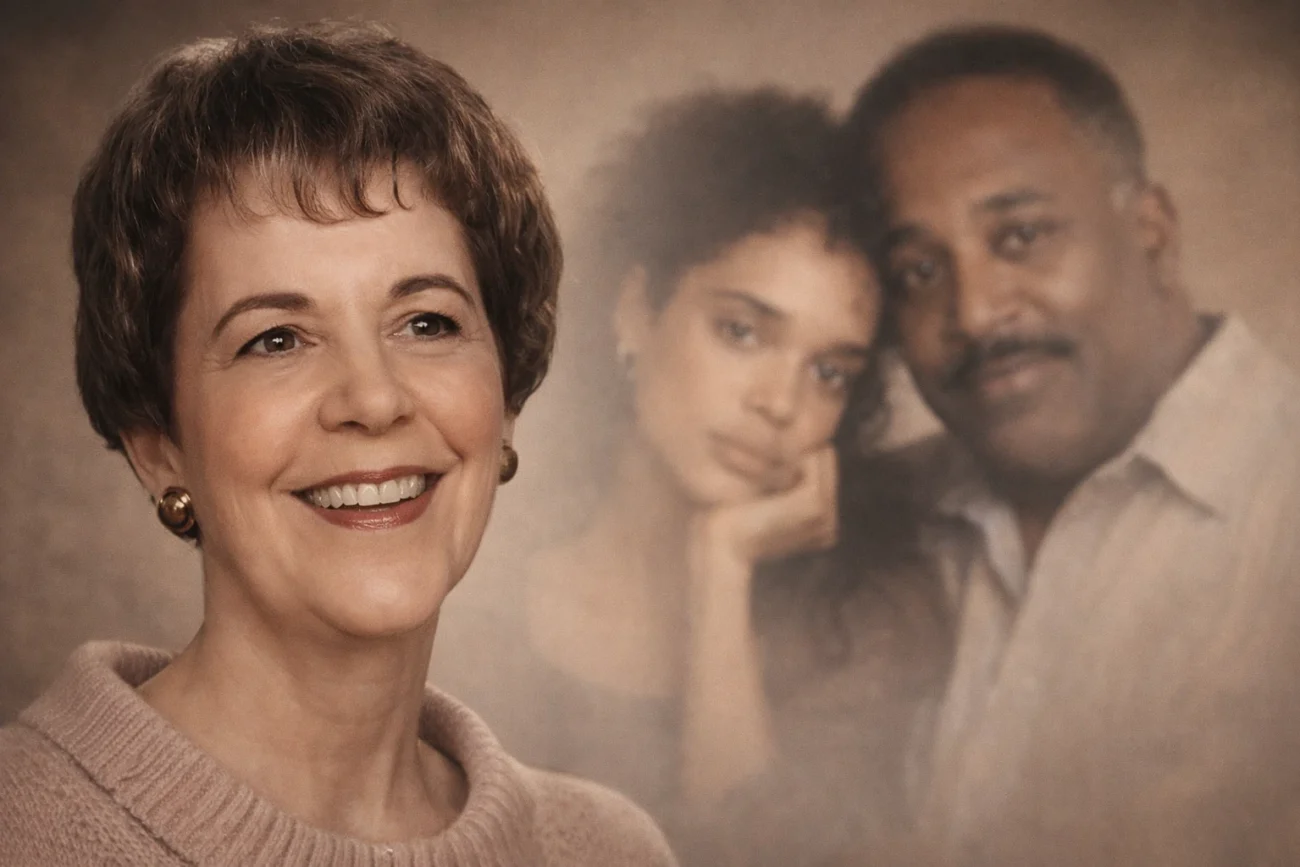
Arlene Litman’s name doesn’t appear in headlines very often. She wasn’t a film star, a musician, or a public figure in the usual sense. Yet her life continues to draw quiet curiosity, largely because of the people connected to her—her daughter, actress Lisa Bonet, and her granddaughter, Zoë Kravitz.
But here’s the thing. The story of Arlene Litman isn’t one of fame, but of influence that operates just outside it. She represents a kind of presence that shapes lives without seeking attention, a figure whose impact is best understood through the people she raised and the values she carried.
That makes her biography both compelling and challenging. There are fewer hard records than readers might expect, and many online accounts repeat each other without much verification. What remains, though, is enough to sketch a portrait of a woman whose life intersected with culture in ways that still echo today.
Early Life and Family Background
Arlene Litman was born into a Jewish family in the United States, most commonly described as having Ashkenazi Jewish roots. While specific details about her childhood are not widely documented in public records, the available information consistently points to a middle-class upbringing shaped by education and cultural identity.
She came of age during a period of social change in America, when questions of identity, race, and belonging were becoming more visible in everyday life. That context matters, because it later shaped the environment in which she raised her daughter. Even without extensive records, it’s clear that heritage played a role in how Arlene understood family and community.
What’s surprising is how little personal detail survives about her early years. Unlike many biographies tied to famous families, hers hasn’t been filled in by interviews or memoirs. Instead, her early life remains largely inferred through what is known about her daughter’s upbringing and reflections.
Education and Professional Life
Arlene Litman is widely described as a teacher, a profession that suggests both stability and a commitment to learning. Some accounts refer more specifically to her as a music teacher, though that detail appears less consistently documented and should be treated with caution.
Still, the idea of her as an educator aligns with the broader picture. Teaching is often a profession rooted in patience, structure, and a belief in growth, qualities that resonate with how Lisa Bonet later described her own early life and development. It’s not difficult to imagine how those values may have been passed down.
There’s no public record of a high-profile career or major public achievements tied to Arlene’s work. But here’s where perspective matters. Influence doesn’t always come from public recognition, and in her case, the impact of her profession seems to have been personal rather than public.
Relationship with Allen Bonet
Arlene Litman’s life intersected with that of Allen Bonet, an African American opera singer. Their relationship brought together two distinct cultural and racial backgrounds at a time when such unions were less common and often more socially complex.
Together, they had a daughter, Lisa Bonet, born in 1967. The relationship between Arlene Litman and Allen Bonet did not last, and Lisa was primarily raised by her mother. That dynamic—growing up with one parent while maintaining ties to another—would later shape how Lisa Bonet described her own sense of identity.
There’s a catch, though. Details about the nature of Arlene and Allen Bonet’s relationship remain limited in public sources. What can be said with confidence is that their union created a family story that would later become part of a broader cultural conversation about mixed heritage and belonging.
Raising Lisa Bonet
Arlene Litman’s most visible legacy is her role as Lisa Bonet’s mother. Lisa grew up navigating a world where she often felt caught between identities—Black and Jewish, connected to both yet fully claimed by neither. That experience has been described in interviews and profiles over the years.
Arlene appears to have raised Lisa largely on her own, providing a stable environment during her formative years. While Lisa Bonet later entered the entertainment industry and became widely known for her role on The Cosby Show, her early life was shaped far from Hollywood’s spotlight.
Not many people know this, but Lisa Bonet has spoken about feeling different as a child, an experience tied to her mixed background. That context adds depth to Arlene’s role, suggesting she was raising a child who would need both resilience and a strong sense of self.
Cultural Identity and Influence
One of the most meaningful aspects of Arlene Litman’s story lies in cultural identity. As a Jewish woman raising a daughter of mixed heritage, she was part of a family dynamic that challenged simple labels.
That influence shows up in subtle ways. Lisa Bonet’s later work and public persona often reflected a sense of individuality and resistance to categorization. While it would be an overreach to attribute that entirely to her upbringing, the environment Arlene created clearly played a role.
Here’s where it gets interesting. The conversation around identity that Lisa Bonet embodied in the 1980s and 1990s has become far more mainstream today. In that sense, Arlene Litman’s life sits quietly at the edge of a broader cultural shift.
A Grandmother’s Legacy: Connection to Zoë Kravitz
Arlene Litman’s story extends into another generation through her granddaughter, Zoë Kravitz. As the daughter of Lisa Bonet and musician Lenny Kravitz, Zoë grew up in a family that bridged multiple cultures, industries, and identities.
While Arlene herself remained out of the public eye, her presence is still felt in small but meaningful ways. Zoë Kravitz has referenced her grandmother in public, including naming a shade in her YSL Beauty lipstick collection “Arlene’s Nude,” a gesture that quietly honored her memory.
That moment speaks volumes. It suggests a personal connection strong enough to carry forward into public expression, even if Arlene Litman never sought that kind of recognition herself.
The Challenge of a Private Life in a Public Age
Writing about Arlene Litman comes with a particular challenge. The available information is limited, and much of what exists online is repeated across multiple sources without clear documentation.
The truth is, she lived a private life. There are no widely known interviews, no memoirs, and no extensive public records that map out her story in detail. For some readers, that might feel like a gap. But it’s also part of what makes her story real.
In an era where so many lives are documented in minute detail, Arlene Litman represents something different. She is a reminder that not every influential life leaves a large public footprint.
Death and Later Years
Many online sources suggest that Arlene Litman passed away in 1998, though the details surrounding her death are not consistently documented across authoritative records. Because of that, any mention of her later years should be approached with care.
What can be said is that her influence did not end with her lifetime. Through her daughter and granddaughter, her presence continues to be part of a family narrative that remains visible in popular culture.
That said, the lack of detailed public information about her later life reinforces the central truth of her story: she was not a public figure, and she did not live her life for public record.
Why Arlene Litman Still Matters
So what does this actually mean? Why does Arlene Litman’s name continue to appear in searches, decades after her life?
Part of the answer lies in curiosity. People want to understand the roots of public figures, especially those like Lisa Bonet and Zoë Kravitz, who carry a strong sense of identity and individuality. Arlene Litman is part of that foundation.
But there’s another layer. Her story reflects the quiet ways in which lives intersect with culture, shaping it from the inside rather than from the spotlight. That kind of influence is harder to measure, but no less real.
Frequently Asked Questions
Who was Arlene Litman?
Arlene Litman was an American teacher best known as the mother of actress Lisa Bonet and the grandmother of Zoë Kravitz. She lived a largely private life and did not seek public attention. Most of what is known about her comes from her connection to her family. Despite limited public records, her role within that family has kept her name in circulation.
Was Arlene Litman Lisa Bonet’s mother?
Yes, Arlene Litman was Lisa Bonet’s mother. Lisa Bonet was born in 1967 to Arlene Litman and Allen Bonet. After her parents separated, Lisa was primarily raised by her mother. This upbringing played an important role in shaping her identity and early life experiences.
What did Arlene Litman do for a living?
Arlene Litman is commonly described as a teacher. Some sources suggest she may have been a music teacher, though that detail is not consistently confirmed. Her professional life appears to have been focused on education rather than public or high-profile work. Her influence is more often discussed in personal rather than professional terms.
Was Arlene Litman related to Zoë Kravitz?
Yes, Arlene Litman was Zoë Kravitz’s maternal grandmother. Zoë Kravitz is the daughter of Lisa Bonet and Lenny Kravitz. Although Arlene did not live a public life, she has been acknowledged by Zoë in personal ways, including a tribute through a named lipstick shade.
Why is there so little information about Arlene Litman?
There is limited information about Arlene Litman because she lived a private life and was not a public figure. Unlike celebrities, she did not give interviews or maintain a public presence. Many online sources repeat similar details without strong documentation, which adds to the difficulty of building a detailed biography. Her story is largely preserved through her family’s public profiles.
Conclusion
Arlene Litman’s life doesn’t fit the mold of a traditional biography. There are no major career milestones to headline, no public appearances to trace, and no archive of interviews to draw from. What remains instead is something quieter and, in its own way, more revealing.
She was a mother, a teacher, and a person who lived outside the spotlight while raising a daughter who would later step into it. That contrast—between private life and public legacy—is at the heart of her story. It’s also what continues to draw attention to her name.
The truth is, many of the most influential lives are not widely documented. They exist in the spaces between public records, carried forward through the people they shape. Arlene Litman’s life fits that pattern.
And as long as Lisa Bonet and Zoë Kravitz remain part of the cultural conversation, Arlene Litman will remain part of the story—quietly, but unmistakably present.
