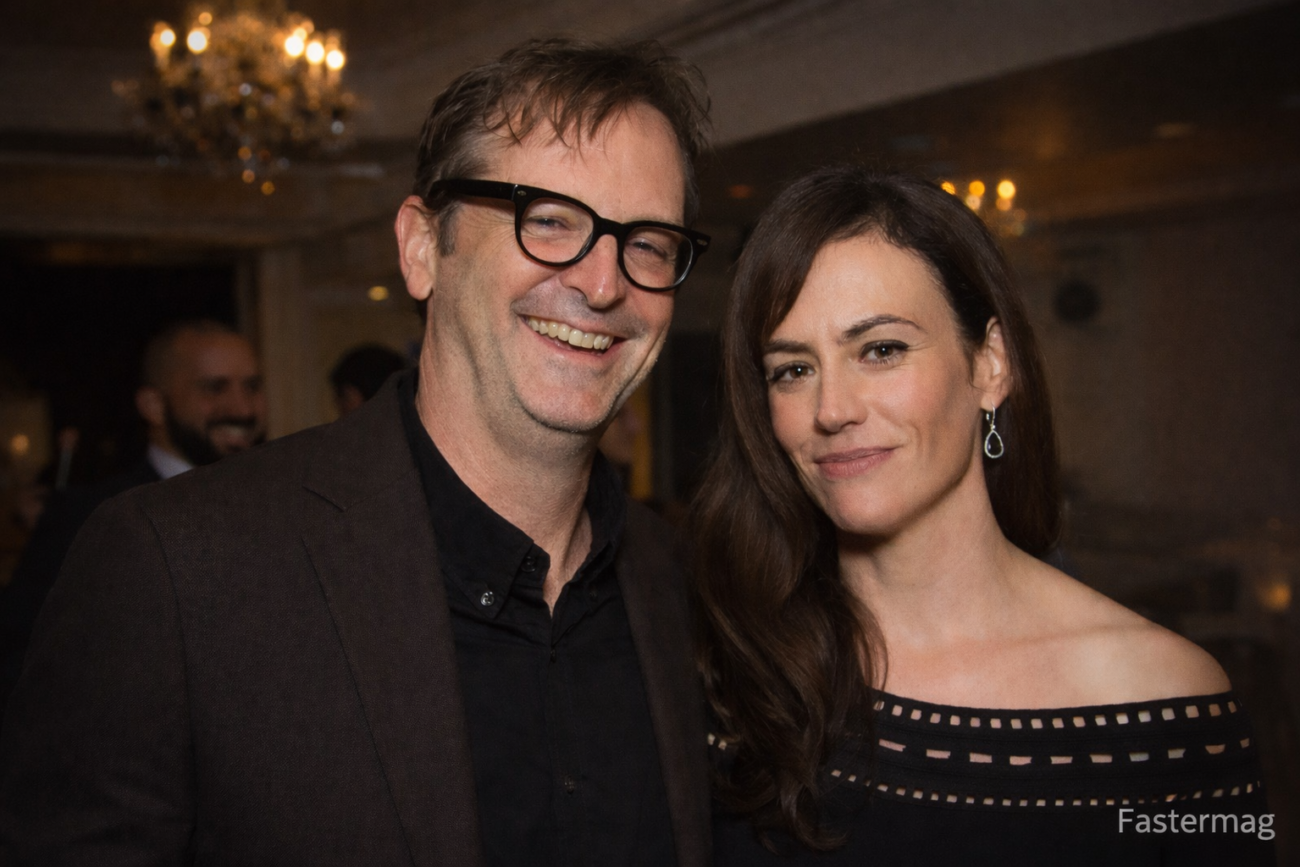
Most people who search for Paul Ratliff are not looking for a celebrity in the usual sense. His name surfaces because of his connection to actress Maggie Siff, known for her roles in Billions, Sons of Anarchy, and Mad Men. But the truth is, Ratliff himself lived largely outside the spotlight, building a career and a life that rarely intersected with public attention.
That contrast—between a high-profile spouse and a deeply private individual—shapes how his story is told. There are fewer headlines, fewer interviews, and fewer easy answers. What remains is a quieter biography, one that requires careful attention to what is known, what is documented, and what has simply been repeated across the internet without clear origin.
Early Life and Background
Details about Paul Ratliff’s early life are limited in the public record, and that absence says something in itself. Unlike public figures whose childhoods are often reconstructed in detail, Ratliff’s upbringing was never part of a public narrative. There are no widely confirmed accounts of his hometown, family structure, or early influences that shaped his path.
Some online biographies suggest specific schools or regions, but many of those claims trace back to secondary sources rather than primary documentation. That said, the absence of confirmed detail aligns with the broader pattern of his life. He did not build a career that relied on visibility, and he did not cultivate a public persona tied to personal history.
What can be said with confidence is that by adulthood, Ratliff had moved into a professional track centered on psychology and counseling. That direction suggests years of academic training and clinical preparation, even if the specifics of those early years remain largely private.
Education and Professional Training
There are references across various sources to Ratliff having pursued higher education in fields related to psychology. Some accounts mention institutions such as Wesleyan University and Pacifica Graduate Institute, both respected for liberal arts and depth psychology programs. But here’s the thing: those details appear frequently in secondary sources, and without direct confirmation, they should be treated cautiously.
What is more firmly grounded is his professional identity. Public listings show a Paul Ratliff working as a licensed marriage and family therapist, based in New York. These records point to a clinical career focused on helping individuals and couples navigate relationships, emotional challenges, and personal growth.
Becoming a therapist requires years of study, supervised training, and licensing. Even without a fully documented academic timeline, his professional standing indicates that he completed that process. It also suggests a commitment to a career that is both demanding and deeply personal, often carried out in private, one conversation at a time.
A Career Built Away from the Spotlight
Ratliff’s work as a therapist stands in sharp contrast to the entertainment industry his wife was part of. Therapy is, by nature, confidential. It does not produce public milestones or visible achievements in the way acting or media work does. Instead, its impact is measured in individual lives, often without recognition beyond the therapy room.
That difference helps explain why his career is not widely documented in the press. Therapists do not typically seek publicity, and ethical standards often discourage it. Ratliff appears to have followed that path, maintaining a professional life that was defined more by discretion than by exposure.
There are occasional references online suggesting that he may have explored other creative or professional avenues earlier in life, including acting or consulting. However, those claims are difficult to verify with certainty and may reflect confusion with others who share the same name. What stands on firmer ground is his identity as a therapist, supported by professional listings and records.
Meeting Maggie Siff
Paul Ratliff’s name entered broader public awareness through his relationship with Maggie Siff. The exact details of how they met have not been widely shared, which again reflects a consistent boundary between their private life and public attention. What is known is that their relationship developed away from media scrutiny.
By the early 2010s, Siff’s career was gaining significant traction. She had already appeared in Mad Men and was becoming more widely recognized. Around that same period, her personal life was taking shape in a way that would later draw interest from fans and media alike.
The couple married in 2012. The wedding itself was not a major public event, and details about the ceremony remain scarce. That choice set the tone for how they would handle their life together: present, but not performative.
Marriage and Family Life
In October 2013, news broke that Maggie Siff was expecting her first child. The announcement came through entertainment media outlets, as is often the case with public figures. While Siff’s pregnancy was covered, Ratliff remained largely out of the frame, mentioned but not spotlighted.
Their daughter, Lucy, was born in 2014. With her arrival, the couple entered a new phase of life that balanced professional demands with family responsibilities. Siff’s career continued to expand, while Ratliff’s work remained grounded in his therapeutic practice.
What stands out is how carefully the family maintained its privacy. There are few public images, few shared details, and no extensive interviews about their home life. Not many people know this, but that level of discretion is often a deliberate choice, especially for families connected to the entertainment world.
Living a Life of Privacy
It’s easy to assume that proximity to fame brings a certain lifestyle or public presence. But Ratliff’s life challenges that assumption. He appears to have remained focused on his work and his family, without stepping into the public roles that sometimes come with being married to a well-known actor.
That separation may have helped preserve a sense of normalcy. Therapy, as a profession, requires a degree of emotional grounding and focus that can be difficult to maintain in a highly public environment. By keeping his personal life out of the spotlight, Ratliff likely protected both his work and his relationships.
There’s also a broader point here about how we understand public figures and their families. Not everyone connected to fame seeks it. In Ratliff’s case, the available evidence suggests the opposite: a preference for privacy, consistency, and meaningful work away from the cameras.
Illness and Death in 2021
In 2021, reports emerged that Paul Ratliff had died after a battle with brain cancer. The news was not widely publicized at first, reflecting the same privacy that had defined much of his life. Over time, the information became more widely known through public records and summaries of Maggie Siff’s biography.
There are few details available about the course of his illness, and that absence should be respected. Medical struggles, especially those involving serious conditions like brain cancer, are deeply personal. The public record confirms the broad outline but does not provide a detailed account.
What can be said is that his death marked a significant moment for his family. Siff has continued her career in the years since, appearing in Billions and other projects, but she has done so without turning her personal loss into a public narrative. That choice aligns with the couple’s longstanding approach to privacy.
Financial Standing and Public Estimates
Because Paul Ratliff was not a public figure in the traditional sense, there are no widely accepted estimates of his personal net worth. Some websites attempt to assign figures, often combining his income with that of his wife, but these numbers vary and are not supported by reliable financial disclosures.
Therapists, particularly those in private practice in cities like New York, can earn stable and respectable incomes. However, their earnings typically do not reach the levels associated with entertainment industry figures. Any attempt to quantify Ratliff’s net worth should be approached with caution.
Maggie Siff’s financial standing, by contrast, has been more widely discussed due to her acting career. Still, the couple’s finances were private, and there is no clear breakdown of shared assets or individual earnings. The truth is, financial details are among the least reliable aspects of online biographies.
The Challenge of a Common Name
One of the more confusing aspects of researching Paul Ratliff is the presence of other individuals with the same name. There is a former Major League Baseball player named Paul Ratliff, as well as an actor with IMDb credits under that name. These overlaps can easily lead to mistaken identity.
Here’s where it gets interesting. Some online biographies appear to merge details from different individuals, creating composite profiles that are not entirely accurate. This is a common issue with lesser-known figures who share names with public personalities.
For readers, the key is to focus on context. The Paul Ratliff connected to Maggie Siff is best understood through his role as a therapist and his family life. Other achievements or credits should only be attributed if they can be clearly linked to him.
A Life Measured Differently
The story of Paul Ratliff does not follow the typical arc of a public biography. There are no red carpets, no major awards, and no widely reported milestones. Instead, his life was shaped by work that is often invisible to the broader public and by relationships that were kept out of the spotlight.
That doesn’t make the story any less meaningful. In many ways, it highlights a different kind of success—one rooted in personal connection, professional dedication, and a clear sense of boundaries. The truth is, lives like Ratliff’s are far more common than the celebrity narratives that dominate headlines.
His legacy, such as it is recorded, exists in the quieter spaces: the people he worked with, the family he built, and the life he chose to keep largely private.
Frequently Asked Questions
Who was Paul Ratliff?
Paul Ratliff was a licensed marriage and family therapist based in New York and the husband of actress Maggie Siff. He was not a public figure in the traditional sense and lived much of his life outside the spotlight. His name became more widely known through his marriage and later through reports of his death. Public records confirm his professional role, though many personal details remain private.
What did Paul Ratliff do for a living?
Ratliff worked as a therapist, specializing in marriage and family counseling. This type of work involves helping individuals and couples address emotional and relational challenges. His career required formal training, licensing, and clinical experience. Unlike entertainment careers, his work was conducted privately and is not widely documented in the media.
Was Paul Ratliff married to Maggie Siff?
Yes, Paul Ratliff married Maggie Siff in 2012. Their relationship was kept largely out of the public eye, with few details shared in interviews or media coverage. The couple maintained a private family life despite Siff’s visibility as an actor. Their marriage lasted until his death in 2021.
Did Paul Ratliff and Maggie Siff have children?
They had one daughter, Lucy, who was born in 2014. The family has consistently maintained privacy around their personal life, including their child. Public appearances and interviews rarely included details about their home life. This approach reflects a deliberate effort to separate family from public attention.
How did Paul Ratliff die?
Paul Ratliff died in 2021, reportedly after battling brain cancer. Specific details about his illness have not been widely shared in public sources. The information that is available comes from general biographical summaries rather than detailed reporting. His death was not heavily covered in the media, consistent with his private life.
Conclusion
Paul Ratliff’s life resists the usual framework of celebrity biography. There is no dramatic rise to fame, no public persona carefully shaped for audiences. Instead, there is a quieter story, one that unfolds largely out of view and is pieced together through a handful of reliable facts.
His career as a therapist suggests a life spent listening, guiding, and supporting others in ways that rarely make headlines. That work, by its nature, leaves little public trace. Yet it is no less significant for being private, and it reflects a commitment that is both demanding and deeply human.
His marriage to Maggie Siff brought his name into public awareness, but it did not change the way he lived. The couple’s approach to privacy remained steady, even as Siff’s career grew. That consistency speaks to a shared understanding of what they wanted their life to look like.
Looking ahead, the story of Paul Ratliff may remain largely unchanged, defined by what is known and what is respectfully left unsaid. But that, in its own way, is revealing. It reminds us that not every life connected to fame is meant to be fully visible, and that sometimes, the most honest biography is the one that knows its limits.
