Most people who search for Marlene Knaus are really tracing a story that intersects with one of Formula 1’s most recognizable figures, Niki Lauda. Her name appears in headlines, biographies, and family histories, often framed through that connection. But the truth is more layered than a simple label like “former wife.” What makes her story compelling isn’t just who she married, but how firmly she stepped away from public life afterward.
Unlike many figures linked to global fame, Marlene Knaus never built a lasting public persona. She appeared briefly in the orbit of celebrity during the 1970s and 1980s, then receded almost completely. That absence has fueled curiosity ever since, turning her into a subject of repeated searches and recycled biographies. But here’s the thing: the more closely you look, the clearer it becomes that her life has always been defined by privacy rather than exposure.
Early Life and Background
The details of Marlene Knaus’s early life are surprisingly difficult to pin down with certainty. Many sources suggest she was born in the mid-1950s, often citing 1956 as a likely year, though documentation is limited and sometimes inconsistent. Reports about her nationality vary as well, with some describing her as Austrian and others suggesting a more mixed background.
What can be said with confidence is that she came of age during a time when European fashion and social scenes were shifting rapidly. By the early 1970s, she was reportedly part of a circle that moved between cities like Vienna and other cultural hubs. That period placed her close to the kind of social environments where high-profile athletes, artists, and models often crossed paths.
Not many people know this, but her early visibility wasn’t tied to a single profession in a clearly documented way. Some accounts describe her as a model or social figure, but contemporary records from that era are thin. That lack of clarity has followed her throughout her life, making it difficult to separate confirmed fact from repeated assumption.
A Meeting That Changed the Course of Her Life
Marlene Knaus met Niki Lauda during the early years of his racing career, a time when he was still building his reputation in Formula 1. Lauda, known for his intense focus and analytical approach to racing, was not the typical flamboyant sports figure. That contrast may have been part of what drew them together.
By the mid-1970s, Lauda’s career was accelerating, and his personal life began to attract more attention. The couple married in 1976, the same year Lauda secured his second Formula 1 World Championship. It was also the year of his near-fatal crash at the Nürburgring, an event that would define his public image for decades.
Their marriage unfolded against the backdrop of one of the most dramatic periods in motorsport history. Lauda’s recovery and return to racing became a global story, and by extension, so did the lives of those closest to him. But while Lauda embraced the public nature of his career, Marlene Knaus remained largely out of the spotlight.
Marriage to Niki Lauda and Life in the Public Eye
Being married to a Formula 1 champion in the 1970s and 1980s came with a level of exposure that was difficult to avoid. Races drew international attention, and the drivers themselves were becoming global celebrities. Yet Marlene Knaus did not pursue that visibility in the way many spouses of public figures might.
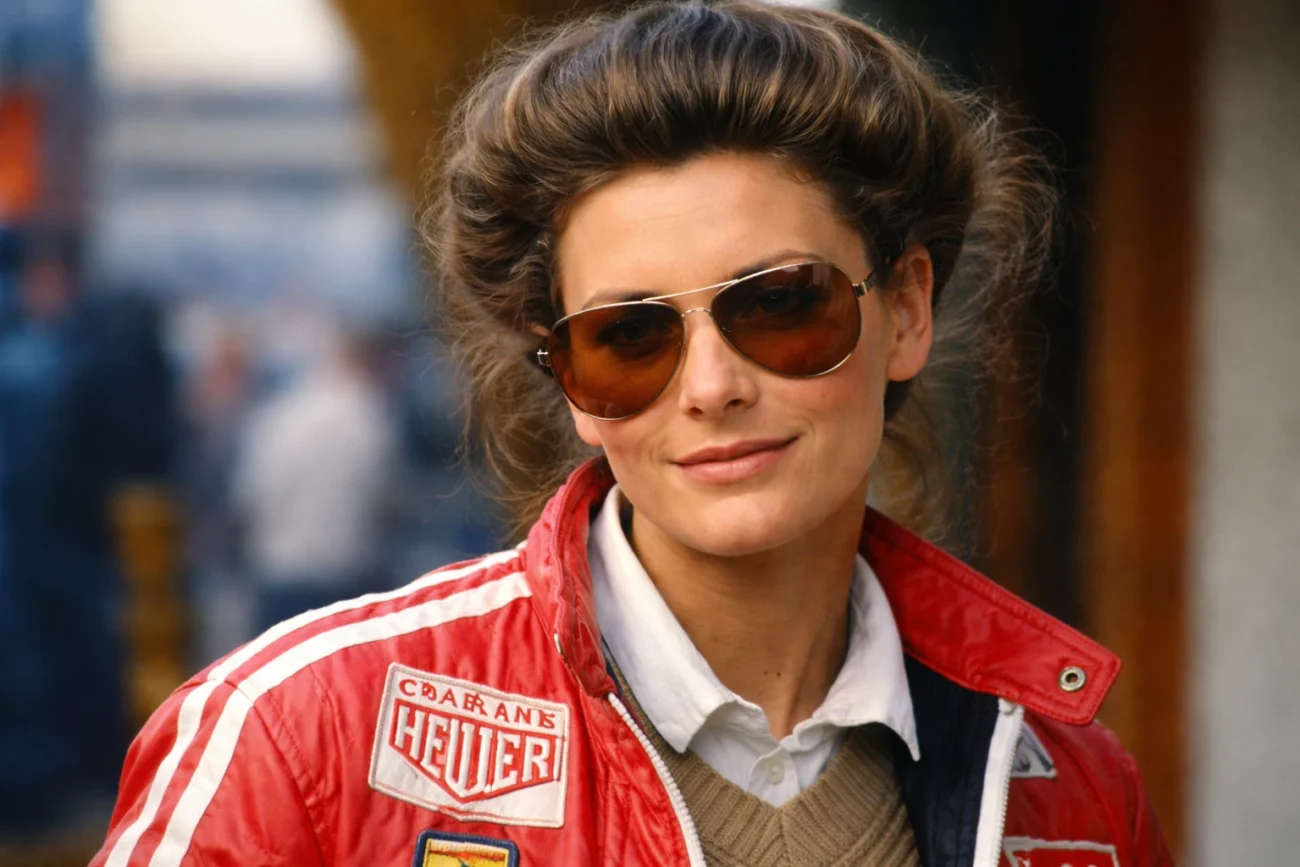
Photographs from that period show her at events and alongside Lauda, often described as stylish and composed. Some publications at the time referred to her as a striking presence, someone who stood out without appearing to seek attention. But those glimpses were limited, and she rarely gave interviews or shared details about her life.
Here’s where it gets interesting. Despite her proximity to fame, she never built a separate media identity. There were no major endorsements, no public ventures tied to her name, and no sustained effort to remain visible. That decision shaped how she would later be remembered—or, in many ways, how little would be known about her.
Marriage and Children
Marlene Knaus and Niki Lauda had two sons together, Lukas and Mathias. Their family life, while connected to a high-profile career, remained relatively shielded from public scrutiny. That approach extended to their children, who were not thrust into the spotlight during their early years.
Mathias Lauda would later follow in his father’s footsteps, becoming a professional racing driver. His career brought renewed attention to the family name, linking a new generation to the legacy of Formula 1. Lukas Lauda, on the other hand, has largely stayed out of public view, though he has been involved in supporting his brother’s career.
Raising children within the world of international racing meant balancing intense schedules with family life. Travel, media attention, and the risks associated with the sport were constant factors. But from the outside, the Lauda household appeared to maintain a degree of normalcy that was not always common in such circumstances.
The End of the Marriage
After more than a decade together, Marlene Knaus and Niki Lauda divorced in 1991. The reasons behind the separation were never fully detailed in public, and both parties largely avoided discussing the matter in depth. That restraint was consistent with how they had handled their personal lives throughout their marriage.
The divorce marked a turning point, not only in their relationship but in Marlene Knaus’s visibility. While Lauda continued his career and later remarried, she stepped even further away from public life. The contrast between their post-divorce paths became more pronounced over time.
That said, the separation did not erase the connection between them. Their shared history and their children ensured that their lives remained linked, even as they moved in different directions. For observers, though, Marlene Knaus became increasingly difficult to track.
Life After Divorce
After her divorce from Niki Lauda, Marlene Knaus effectively disappeared from the public record. Unlike many individuals connected to high-profile figures, she did not reinvent herself through media appearances, business ventures, or public statements. Instead, she chose a quieter path.
There are occasional claims about where she may have lived or how she spent her later years, but these are often based on limited or unverified sources. Some reports suggest she settled in parts of Europe, possibly maintaining a low-profile lifestyle away from major cities. Still, firm documentation is scarce.
The truth is, her post-divorce life remains largely private by design. That absence of information has led to speculation, but it also reflects a deliberate choice. In an era when many people connected to fame remain visible, her decision to step back stands out.
The Challenge of Verifying Her Story
One of the most striking aspects of Marlene Knaus’s biography is how much of it remains uncertain. Basic details that are usually easy to confirm—such as birthplace, education, or early career—are often presented differently across various sources. This creates a patchwork of information that requires careful scrutiny.
Many online profiles repeat the same claims without citing original documentation. Over time, those claims begin to appear more credible simply because they are repeated so often. But repetition is not the same as verification, and in Knaus’s case, that distinction matters.
So what does this actually mean? It means that any serious account of her life must acknowledge those gaps. Rather than filling them with assumptions, a responsible biography focuses on what can be confirmed and clearly distinguishes it from what remains uncertain.
Her Place in the Lauda Legacy
Even though Marlene Knaus chose a private life, her place in the broader story of Niki Lauda is secure. She was present during some of the most defining years of his career, including moments that shaped how he is remembered today. Their marriage coincided with both triumph and adversity, including his remarkable comeback after his 1976 crash.
Through their sons, her connection to that legacy continues. Mathias Lauda’s involvement in motorsport has kept the family name active within racing circles. That continuity adds another layer to her story, linking past and present through shared experience.
At the same time, her absence from public narratives has allowed her to remain somewhat undefined. She is known through association, yet not fully described by it. That tension is part of what keeps interest in her alive.
Public Curiosity and Ongoing Interest
Search interest in Marlene Knaus has persisted for years, often spiking around major events related to Niki Lauda or Formula 1 history. Films like Rush, which dramatized Lauda’s career, have also contributed to renewed curiosity about his personal life and relationships.
But the appeal goes beyond that. People are drawn to stories that resist easy answers, and her life offers exactly that. She represents a rare case of someone who moved through a high-profile environment without becoming defined by it.
There’s a catch, though. The lack of detailed information can lead to overinterpretation. Without careful reporting, it’s easy to turn absence into myth. A more grounded approach recognizes that her story is as much about what is not publicly known as what is.
Frequently Asked Questions
FAQ
Who is Marlene Knaus?
Marlene Knaus is best known as the former wife of Formula 1 champion Niki Lauda. She was married to him from 1976 until their divorce in 1991. During that time, she was part of one of the most closely watched personal stories in motorsport. Despite that visibility, she maintained a relatively private presence.
Did Marlene Knaus and Niki Lauda have children?
Yes, they had two sons, Lukas and Mathias Lauda. Mathias later became a professional racing driver, continuing the family’s connection to motorsport. Lukas has remained more private but has been involved in supporting his brother’s career. Their children represent one of the most well-documented aspects of her life.
Was Marlene Knaus a model?
Some sources describe her as a model or social figure in the 1970s, but there is limited verified documentation to confirm the extent of that work. These descriptions appear frequently in online biographies, though they are not always supported by primary sources. It’s best to treat those claims with caution unless backed by stronger evidence.
Where is Marlene Knaus now?
There is no widely confirmed public information about her current residence or activities. Various reports suggest she has lived in Europe and maintained a low-profile lifestyle. However, these claims are often based on limited sourcing. Her current life remains largely private.
Why did Marlene Knaus and Niki Lauda divorce?
The exact reasons for their divorce in 1991 were not publicly detailed. Both individuals kept their personal matters largely out of the media. As a result, there is no definitive public account explaining the separation. Their approach to privacy continued even after the marriage ended.
Conclusion
Marlene Knaus occupies a unique place in the public imagination. She is both well-known and largely unknown at the same time, recognized through her connection to Niki Lauda but not defined by a detailed public record of her own. That duality makes her story unusual, especially in an age when personal histories are often exhaustively documented.
Her life offers a reminder that proximity to fame does not always lead to visibility. While many people in similar positions become public figures in their own right, she chose a different path. That decision has shaped how she is remembered and how her story continues to be told.
There’s also something revealing in the way interest in her has persisted. People continue to search for answers, hoping to fill in the gaps left by her absence from the spotlight. But those gaps are not accidental; they reflect a life lived with clear boundaries.
Looking ahead, it’s unlikely that Marlene Knaus will re-enter public view in any significant way. And perhaps that’s the most defining part of her story. In a world that often rewards constant visibility, she remains a figure who stepped away—and stayed away.
